Why Waste Grab Cranes Fail Early – MSW Plant Solutions
Learn why waste grab bucket cranes fail early in MSW plants, common causes, and practical design and maintenance strategies to prevent downtime.
Why Waste Grab Bucket Cranes Fail Early in MSW Plants—and How to Avoid It
Introduction
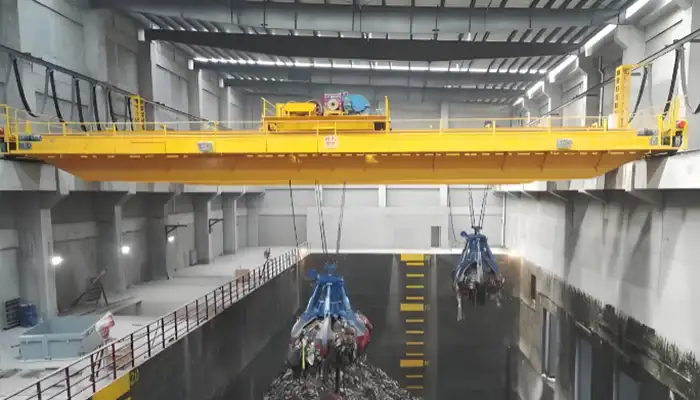
Picture this: a busy MSW plant, trucks delivering tons of mixed waste every hour, and the grab bucket crane moving continuously to feed hoppers and conveyors. Everything seems smooth—until the crane suddenly stops. A worn motor, a corroded cable, or a bucket that won’t close properly. Operations grind to a halt.
Early failures like this are more common than most plant managers realize. Waste grab crane failure doesn’t just mean repairs—it means downtime, increased costs, and lost productivity. Even a small malfunction can ripple through the plant, slowing waste processing and creating safety hazards.
So why does it happen? Most issues boil down to two areas:
- Design limitations – cranes not built for abrasive, corrosive waste environments, grab buckets that wear out quickly, or structures not sized for actual plant throughput.
- Maintenance gaps – irregular inspections, delayed lubrication, or worn parts not replaced on time, leading to more serious breakdowns.
In this guide, we’ll explore:
- The common failure modes that cause early breakdowns
- How both design and maintenance contribute to problems
- Practical steps to prevent failures, extend crane life, and improve overall plant efficiency
Common Failure Modes in Waste Grab Cranes
Waste grab bucket cranes face a tough environment every day. Heavy, mixed waste, abrasive materials, and constant operation put immense stress on both mechanical and electrical systems. Understanding the common failure modes helps plant managers and operators prevent unexpected downtime.
Mechanical breakdowns are among the most frequent causes of early crane failure. Key issues include:
- Hoist and trolley breakdowns – Motors and gears wear out faster when overloaded or poorly lubricated. Frequent start-stop cycles can also accelerate wear.
- Grab bucket linkage wear and tear – Linkages and pivot points are in constant motion, and abrasive waste can cause accelerated wear or even deformation over time.
- Structural fatigue of crane girders – Repeated lifting of heavy loads, combined with vibration and stress concentrations, can lead to cracks or bending in girders if the design doesn't account for the actual working loads.
Even the strongest mechanical systems fail without reliable electrical and control systems. Common issues include:
- Motor and drive malfunctions – Overheating, insufficient cooling, or voltage spikes can damage motors and drives.
- Cable and wiring degradation – Exposure to moisture, abrasion, or chemical residues can deteriorate insulation, causing short circuits or intermittent faults.
- Sensor and automation errors – Faulty or misaligned sensors can trigger improper control signals, stopping operations or causing unsafe conditions.
Waste grab cranes operate in harsh, often corrosive conditions. Problems frequently arise from:
- Exposure to moisture, chemical residues, and abrasive waste – These factors accelerate rusting and can damage moving parts.
- Rusting of steel structures and moving parts – Corrosion weakens structural components and can compromise safety if not addressed promptly.
Sometimes failures are not purely technical. Human and operational factors play a major role:
- Operator errors causing overload or improper handling – Lifting beyond rated capacity or mishandling the grab bucket can stress components beyond design limits.
- Poorly matched crane capacity to waste characteristics – Using a crane with insufficient capacity for the type or volume of waste can accelerate wear, leading to premature failure.
Design vs. Maintenance Causes
Early failures in waste grab bucket cranes usually come down to two main areas: the crane’s design and how it’s maintained. Both are equally important—ignoring one can undermine the other.
Design-Related Causes
Some cranes are simply not built to handle the harsh conditions of an MSW plant. Common design shortcomings include:
- Grab bucket not durable enough – Standard buckets wear out quickly when lifting mixed or abrasive waste. Reinforced or abrasion-resistant materials are often needed.
- Poor corrosion resistance – Moisture, chemical residues, and acidic waste can quickly rust unprotected steel.
- Underestimated structural loads – Cranes designed for lighter duty may fail if daily lifting cycles or load weights exceed expectations.
- Hard-to-access components – If it’s difficult to reach parts for inspection or maintenance, small issues can go unnoticed until they cause major failures.
Maintenance-Related Causes
Even a well-designed crane can fail early if it isn’t properly maintained. Typical maintenance issues include:
- Infrequent inspections and lubrication – Moving parts need regular checks and oiling. Skipping these routines accelerates wear.
- Delayed part replacements – Worn-out cables, hoists, or linkages should be replaced promptly; otherwise minor problems escalate.
- Lack of trained personnel – Maintenance staff unfamiliar with crane mechanics may miss signs of stress or corrosion.
- Poor record-keeping – Without detailed logs, recurring issues may go unnoticed and preventive measures are less effective.
Common Failure Modes in Waste Grab Cranes
Waste grab bucket cranes face a tough environment every day. Heavy, mixed waste, abrasive materials, and constant operation put immense stress on both mechanical and electrical systems. Understanding the common failure modes helps plant managers and operators prevent unexpected downtime.
Mechanical breakdowns are among the most frequent causes of early crane failure. Key issues include:
- Hoist and trolley breakdowns – Motors and gears wear out faster when overloaded or poorly lubricated. Frequent start-stop cycles can also accelerate wear.
- Grab bucket linkage wear and tear – Linkages and pivot points are in constant motion, and abrasive waste can cause accelerated wear or even deformation over time.
- Structural fatigue of crane girders – Repeated lifting of heavy loads, combined with vibration and stress concentrations, can lead to cracks or bending in girders if the design doesn't account for the actual working loads.
Even the strongest mechanical systems fail without reliable electrical and control systems. Common issues include:
- Motor and drive malfunctions – Overheating, insufficient cooling, or voltage spikes can damage motors and drives.
- Cable and wiring degradation – Exposure to moisture, abrasion, or chemical residues can deteriorate insulation, causing short circuits or intermittent faults.
- Sensor and automation errors – Faulty or misaligned sensors can trigger improper control signals, stopping operations or causing unsafe conditions.
Waste grab cranes operate in harsh, often corrosive conditions. Problems frequently arise from:
- Exposure to moisture, chemical residues, and abrasive waste – These factors accelerate rusting and can damage moving parts.
- Rusting of steel structures and moving parts – Corrosion weakens structural components and can compromise safety if not addressed promptly.
Sometimes failures are not purely technical. Human and operational factors play a major role:
- Operator errors causing overload or improper handling – Lifting beyond rated capacity or mishandling the grab bucket can stress components beyond design limits.
- Poorly matched crane capacity to waste characteristics – Using a crane with insufficient capacity for the type or volume of waste can accelerate wear, leading to premature failure.
Preventive Design Strategies
Preventing early waste grab crane failure is about designing for the real-world demands of MSW plants. A crane built for durability and ease of maintenance will save time, money, and headaches down the line.
The grab bucket takes the brunt of daily operations. To make it last longer:
- Use abrasion-resistant steel and reinforced linkages to withstand mixed waste and heavy debris.
- Match bucket design to waste type—bulk, mixed, or heavy—so stress is minimized and efficiency improves.
Corrosion is a silent killer in MSW cranes. Simple material choices make a big difference:
- Use galvanized or painted steel for outdoor or humid environments.
- Install sealed bearings and motors to keep moisture and debris out of critical components.
Mechanical reliability is key to preventing downtime:
- Choose oversized components rated for actual plant throughput, not just theoretical loads.
- Design for easy access to critical parts—inspection and maintenance should not require major disassembly.
Many failures start in the control system. Improve reliability by:
- Adding redundant safety systems like backup sensors and emergency stops.
- Using modular control systems for faster troubleshooting and part replacement.
Even the best crane fails if it's misused:
- Train operators properly on weight limits, handling techniques, and safe operation.
- Match crane cycles to plant throughput—avoid overworking the crane to reduce mechanical and electrical stress.
Maintenance Best Practices
Even the best-designed waste grab bucket cranes will fail prematurely without proper maintenance. A structured maintenance routine ensures reliability, reduces unexpected downtime, and extends the life of the crane.
Routine inspections are essential to catch small issues before they become major problems:
- Check mechanical components like hoists, trolleys, linkages, and grab buckets for wear and alignment.
- Inspect electrical systems, including motors, wiring, and control panels, for signs of damage or degradation.
- Look for early signs of corrosion or cracking in structural elements.
Keeping moving parts clean and well-lubricated reduces wear and prevents corrosion:
- Apply recommended lubricants to hoist gears, bearings, and pivot points on a scheduled basis.
- Remove dust, debris, and waste residue from the crane structure and moving parts.
- Pay extra attention to areas exposed to moisture or chemicals.
Testing ensures the crane is operating safely and efficiently:
- Conduct regular load tests to verify that the crane can handle rated capacities without strain.
- Calibrate the grab bucket to ensure it opens, closes, and grips properly, reducing stress on the linkage and hoist.
- Adjust settings as needed based on observed wear or plant operational changes.
Keeping detailed maintenance records helps prevent repeated failures:
- Document inspections, repairs, and part replacements to track recurring issues.
- Replace worn components proactively, before they fail and cause downtime.
- Use maintenance logs to plan spare parts inventory and maintenance schedules.
Case Studies
Real-world examples highlight how waste grab bucket cranes fail early and, more importantly, how plants can prevent these issues with proper design and maintenance.
- Scenario: A busy MSW plant experienced frequent hoist and grab bucket failures after just two years of operation. Operators noticed slower bucket response and unusual noises during lifting.
- Solution: The plant upgraded the grab bucket to abrasion-resistant steel and reinforced the linkage. Maintenance schedules were tightened, with regular lubrication and inspection of pivot points.
- Result: Mechanical breakdowns dropped significantly, and crane reliability improved, even under high daily loads.
- Scenario: An outdoor waste transfer station saw rapid rusting on crane girders and moving parts due to constant exposure to moisture and acidic waste. Electrical contacts were also failing frequently.
- Solution: The crane structure was repainted with corrosion-resistant coatings, and sealed bearings were installed. Electrical panels were upgraded with moisture protection.
- Result: Corrosion-related failures were nearly eliminated, and maintenance costs decreased over the following year.
- Scenario: In a mid-sized MSW plant, operators were using the crane to lift heavier loads than it was rated for, causing structural fatigue and hoist stress.
- Solution: The plant implemented operator training and clearly labeled load limits. Crane cycles were matched to throughput capacity, and a redundant safety system was added to prevent overloads.
- Result: Structural and hoist failures dropped dramatically, and the plant experienced fewer unscheduled shutdowns.
- Many failures can be traced to either design limitations or maintenance gaps.
- Proactive interventions, such as material upgrades, proper lubrication, load calibration, and operator training, can prevent repeated breakdowns.
- Monitoring, recording failures, and adjusting procedures based on real-life experience ensures long-term crane reliability.
Conclusion
Preventing early waste grab crane failure requires attention to both design and maintenance. A crane built to handle the demands of an MSW plant, combined with a structured maintenance program, can operate reliably for many years.
Key Takeaways
- Design matters: Durable grab buckets, corrosion-resistant materials, and robust structural components reduce the risk of mechanical and environmental failures.
- Maintenance is critical: Regular inspections, lubrication, calibration, and timely part replacement prevent minor issues from turning into major breakdowns.
- Operational practices count: Proper operator training and matching crane cycles to plant throughput minimize stress on components and extend crane life.
Next Steps for Plant Operators
- Review your crane design and identify areas for improvement, such as material upgrades or better accessibility for maintenance.
- Implement or refine preventive maintenance routines based on real-world operating conditions.
- Consult with crane suppliers and engineers to evaluate plant-specific needs and ensure that both design and maintenance strategies align with operational demands.